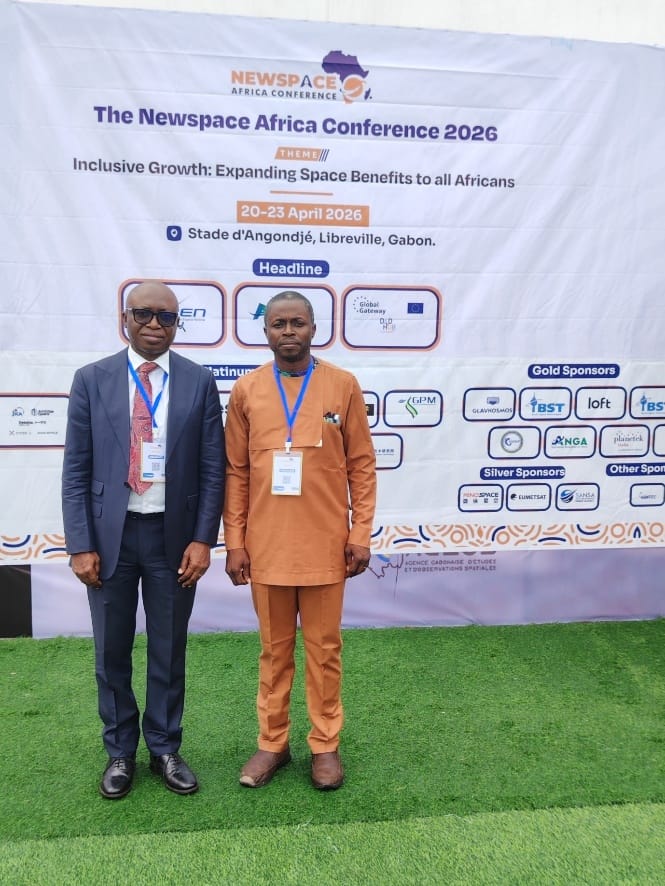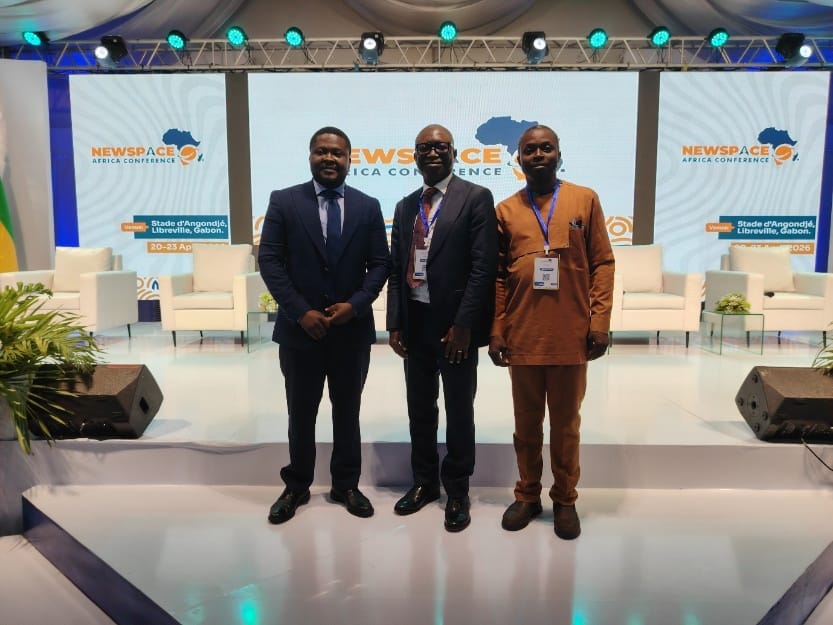
Ghana made a strong showing at the NewSpace Africa 2026 Conference held in Libreville, Gabon, with a high-level delegation that included the Vice Chancellor of the University of Energy and Natural Resources (UENR), Prof. Elvis Asare-Bediako, Prof. Amos Kabo-Bah, Dean of the International Relations Office (IRO), and Dr. Joseph Tandoh, Director of the Ghana Space Science and Technology Institute (GSSTI). The delegation participated actively in discussions spanning continental space leadership, Earth observation for resource governance, and the strategic alignment of African space capacities, themes that are central to Ghana’s preparations for the formal establishment of its national space agency later this year.
The IRO, under the leadership of Prof. Kabo-Bah, championed UENR’s participation in the conference as part of a deliberate institutional strategy to position the university at the forefront of Ghana’s emerging space agenda. The office identified NewSpace Africa 2026 as a critical platform for advancing UENR’s international partnerships and for amplifying the university’s voice in continental conversations around space governance and capacity building.
The presence of UENR at the conference underscored the university’s readiness to play an anchor institutional role in Ghana’s emerging space ecosystem. Through its Earth Observation Research and Innovation Centre (EORIC), UENR brings to the table a suite of critical infrastructure assets, including a COSMIC-2 ground station, carbon monitoring towers, and established partnerships with NASA, ESA, NOAA, and the Chinese Academy of Sciences, positioning the university as a natural cornerstone for Ghana’s space agency rollout agenda.
A highlight of the delegation’s engagements was a strategic interaction facilitated by Prof. Elvis Asare-Bediako, Prof. Kabo-Bah, and representatives of SATLANTIS, the Spanish Space Technology Company, which delivered a keynote address at the conference. SATLANTIS, known for its advanced high-resolution microsatellite imaging systems, expressed a strong interest in deepening its footprint in Africa through institutional partnerships. Following productive discussions, SATLANTIS confirmed its readiness to sign a Memorandum of Understanding with UENR, focused on faculty development in the School of Engineering, with specific emphasis on microsatellite technology design, integration, and operations training. This partnership is expected to significantly accelerate UENR’s capacity to train the next generation of Ghanaian space engineers in alignment with the needs of a future Ghana Space Agency.
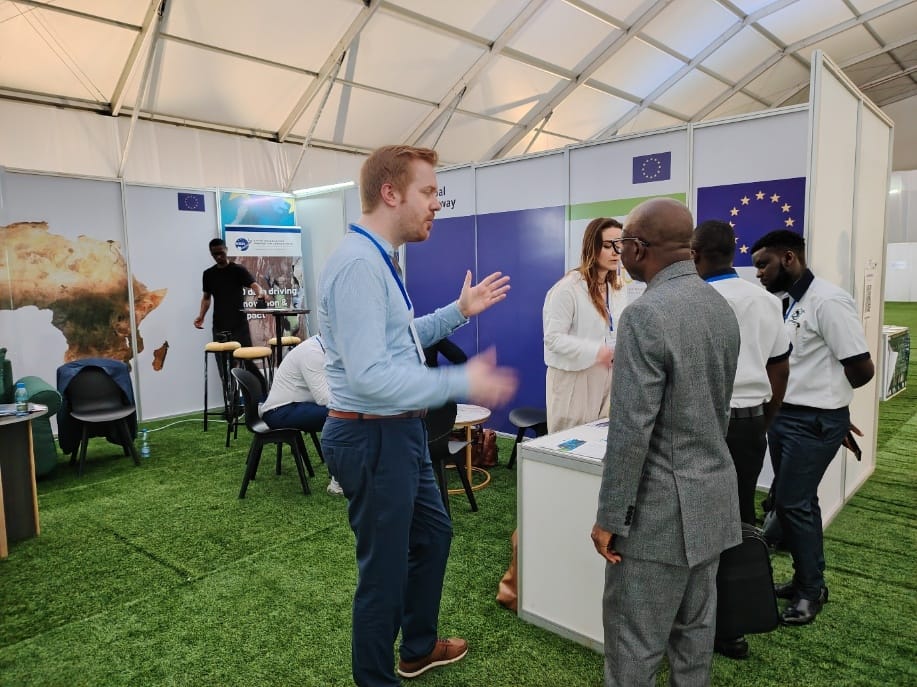
In another major development championed by the IRO, the delegation held a substantive meeting with the Secretariat of the European Union’s Digital for Development Hub (D4D Hub), a flagship EU initiative connecting digital development actors across Africa, Asia, and beyond. The discussions culminated in the formal inclusion of UENR in the D4D Hub program, a recognition of the university’s growing profile as a continental hub for digital innovation, Earth observation, and sustainable development research. This inclusion opens significant new avenues for UENR to access EU-funded digital development resources, collaborative research opportunities, and a network of global partners working at the intersection of technology and development.
The Dean also facilitated a high-level meeting between the delegation and the leadership of Space in Africa, the continent’s premier space industry intelligence and media platform, which served as the principal organizer of the NewSpace Africa 2026 Conference. The meeting resulted in a commitment by Space in Africa to feature UENR prominently in its flagship magazine, providing the university with a high-visibility platform to showcase EORIC’s research infrastructure, its Earth observation and climate services portfolio, and its role in advancing Ghana’s national space ambitions to a pan-African and global audience of space industry stakeholders, investors, and policymakers.
The breadth and quality of partnerships secured at NewSpace Africa 2026 reflect the IRO’s growing effectiveness as a strategic engine for UENR’s internationalization. The delegation returned with concrete commitments spanning space technology training, EU digital development inclusion, and international media visibility — collectively reinforcing UENR’s emergence as a reference institution for space and Earth observation in Sub-Saharan Africa.