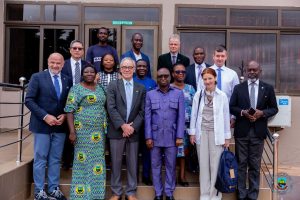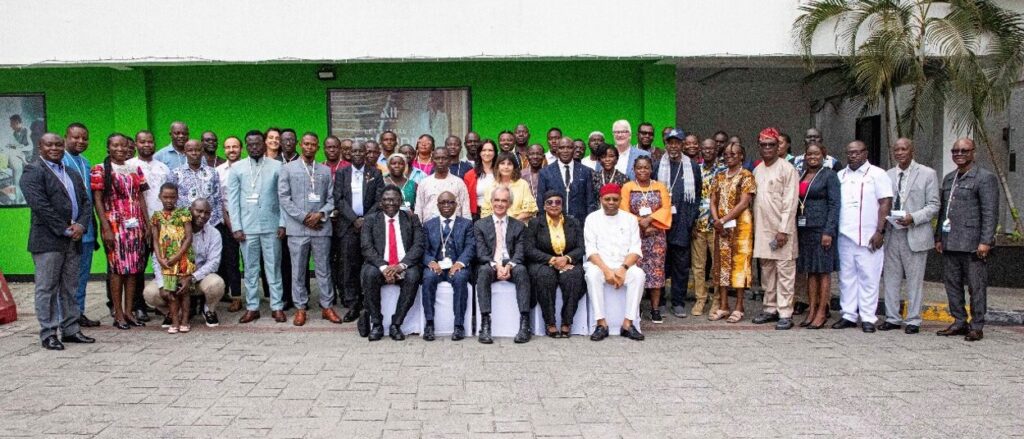
The University of Energy and Natural Resources (UENR) has hosted the two-day Final Conference of the AGRECOFARM Project in Accra. Funded by the Erasmus+ Programme, AGRECOFARM seeks to strengthen higher education capacity in agroecology and support the development and implementation of new curricula and postgraduate programmes in West Africa.
In his welcome address, the Vice-Chancellor of UENR, Professor Elvis Asare-Bediako, said the project’s objective of strengthening the capacity of staff, students and industry through a postgraduate programme that integrates theory and practice in agroecological research aligned strongly with the University’s mission. He noted that although the formal implementation of the project had come to an end, its conclusion should serve as a foundation for new partnerships and initiatives.
Professor Asare-Bediako urged beneficiaries of the project to become ambassadors for sustainable agriculture and to apply the knowledge and skills acquired to address challenges within agricultural and food systems.
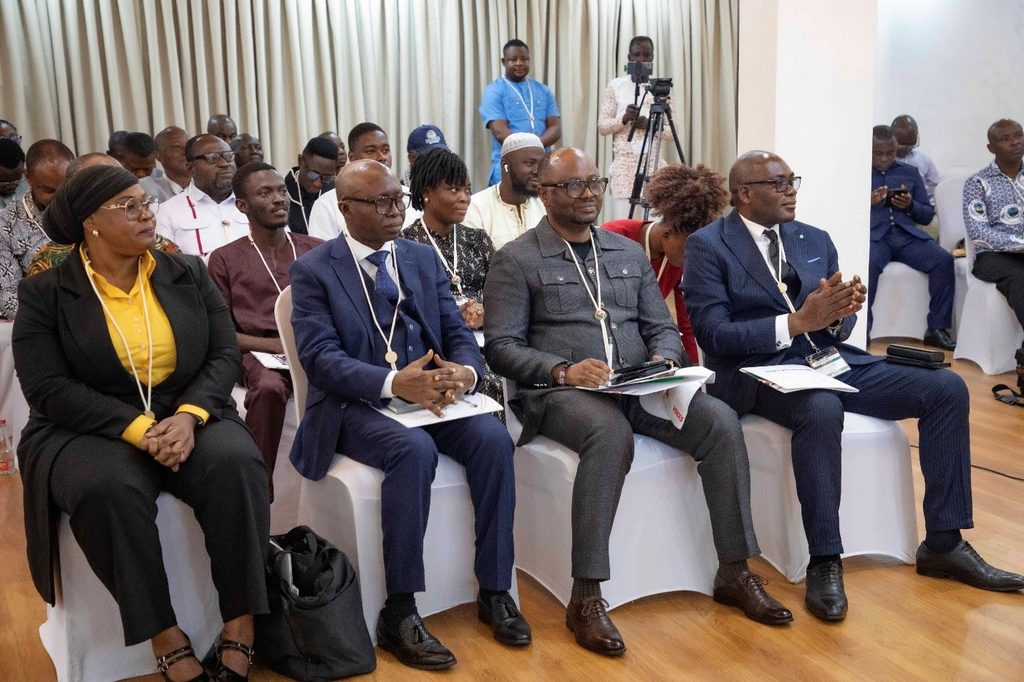
The Secretary-General of the Association of African Universities, Professor Olusola Bandele Oyewole, called for stronger university education and research to respond to the changing demands of the agricultural sector. He stressed the importance of experiential learning, noting that students should have opportunities to learn by doing while researchers should be supported to test and develop new approaches. Professor Oyewole also called on governments across Africa to rely more heavily on universities as reliable sources of knowledge and research to address agricultural and development challenges.
In a presentation on “Precision Agriculture and Efficient Resource Use,” the Project Coordinator, Professor Pietro Picuno, highlighted the role of digital technologies and site-specific management in promoting efficient, resilient and sustainable farming. He explained that precision agriculture seeks to increase output while using fewer resources by applying appropriate interventions at the right place, time and intensity.
Professor Picuno emphasised that precision irrigation must take into account hydrological, agronomic and energy considerations and called for a shift from experience-based to data-driven decision-making through the use of geospatial technologies, remote sensing, artificial intelligence and Decision Support Systems.
Other experts who contributed to the conference included the representative of Peasant Farmers, Ghana; Vice-Chancellor of UAES, Professor Christopher C. Eze; Professor Adebayo M. Shittu of FUNAAB; Professor Alexander Wezel of ISARA; Professor Kay Muhlmann of UWK; Dr. Caterina Picuno of DMTR; Dr. Gibril Sesay of CUSL; and Professor Richard K. Bannor.