
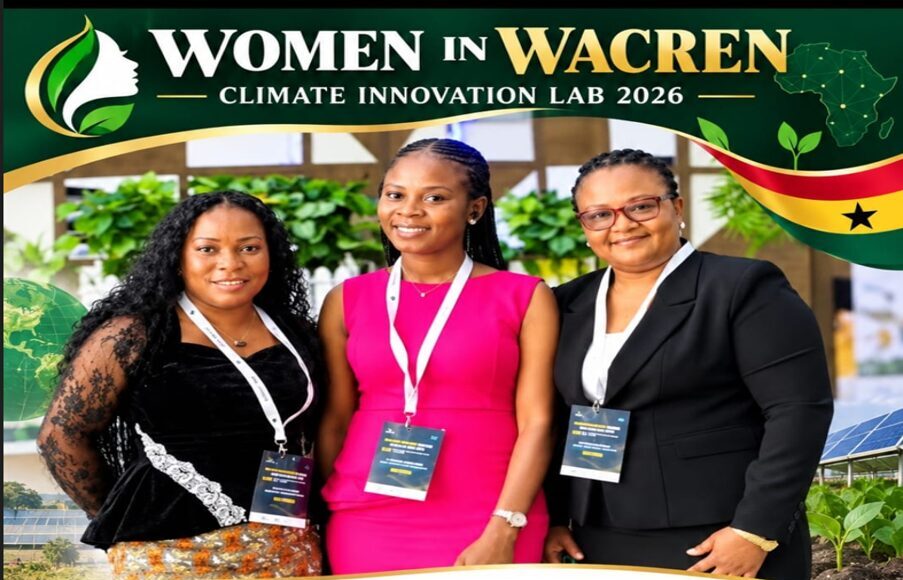
Researchers from the University of Energy and Natural Resources (UENR), Sunyani, have participated in the Women-in-WACREN Innovation Lab 2026, where they proposed a soil-moisture detection device to support women farmers in Northern Ghana to make informed irrigation decisions and adapt to the impacts of climate change. The four-day innovation lab was held from October 12–15, 2026, at the National Open University of Nigeria (NOUN), Nigeria, under the theme “Empowering Women to Build Digital Solutions for Climate Action.”
The programme brought together women researchers, academics, technology experts and innovators from across Africa to explore how digital technologies can address climate challenges and promote sustainable development. Through expert presentations, mentorship, collaborative problem-solving and practical innovation sessions, participants developed human-centred digital solutions aimed at strengthening climate resilience in vulnerable communities.
The UENR research team proposed a handheld soil-moisture detection device designed to help women farmers determine when irrigation is required and improve agricultural water management. The proposed innovation responds to challenges including erratic rainfall, prolonged dry spells, water scarcity and limited access to reliable information on soil moisture, which can affect agricultural productivity and the livelihoods of farming communities.
The device will use a handheld sensor with a soil probe to measure moisture levels and communicate readings through a display or colour-coded indicators. It is expected to help farmers avoid unnecessary watering while improving the efficient use of available water resources. The innovation primarily seeks to support climate change adaptation, with potential benefits including savings in water, time and farming costs. These benefits will be assessed through field testing.
The interdisciplinary team was led by Ms. Sylvia Adipah of the Centre for Climate Change and Gender Studies (3CGS), UENR, and included Dr. Perpetual Zaazie and Ms. Sarah Elikplim Siabi from Ghana, as well as Professor Gloria Aderonke Otunola and Dr. Helen Titilola from Nigeria. The team received mentorship from Mr. Joshua Opoku Agyemang of Ghana, while Mrs. Chineme Esor of Nigeria served as a facilitator.
The proposed development and pilot programme is expected to run for six months and will involve community engagement, prototype construction and calibration, field testing, farmer training and evaluation. Twenty women farmers have been identified as prospective participants for the pilot. The testing will assess the device’s accuracy, affordability, usability and reliability under local farming conditions. The initiative is expected to provide practical evidence on the suitability of digital tools for supporting climate-resilient agricultural practices among smallholder farmers.
A major highlight of the programme was the Women-in-WACREN Community Day, held on October 15, 2026. The event featured expert reflections, partner and community engagements, discussions on women’s experiences in Science, Technology, Engineering and Mathematics (STEM), as well as a panel discussion on “Women at the Forefront of Digital Innovation: Harnessing Technology for Climate Resilience in Africa.”
The participation of UENR researchers highlights the commitment of the Centre for Climate Change and Gender Studies to advancing climate research, promoting gender-responsive innovation and strengthening the role of women in climate action.


