The Regional Centre of Excellence in Energy and Sustainability (RCEES) has donated copies of a new publication aimed at strengthening professional education and industry-driven training in renewable energy in Ghana and beyond.
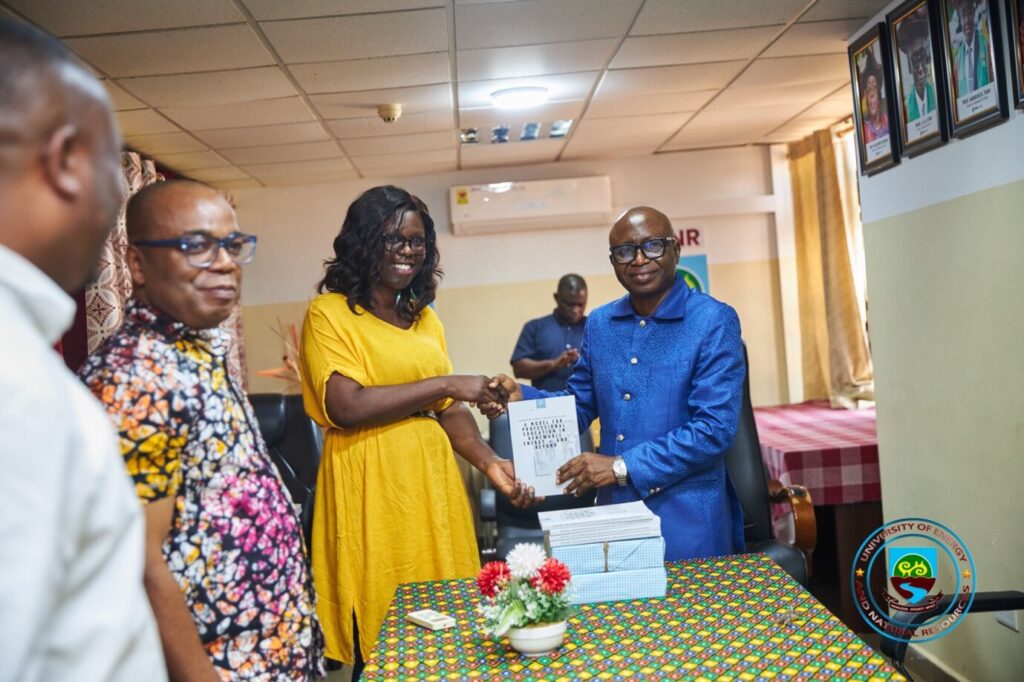
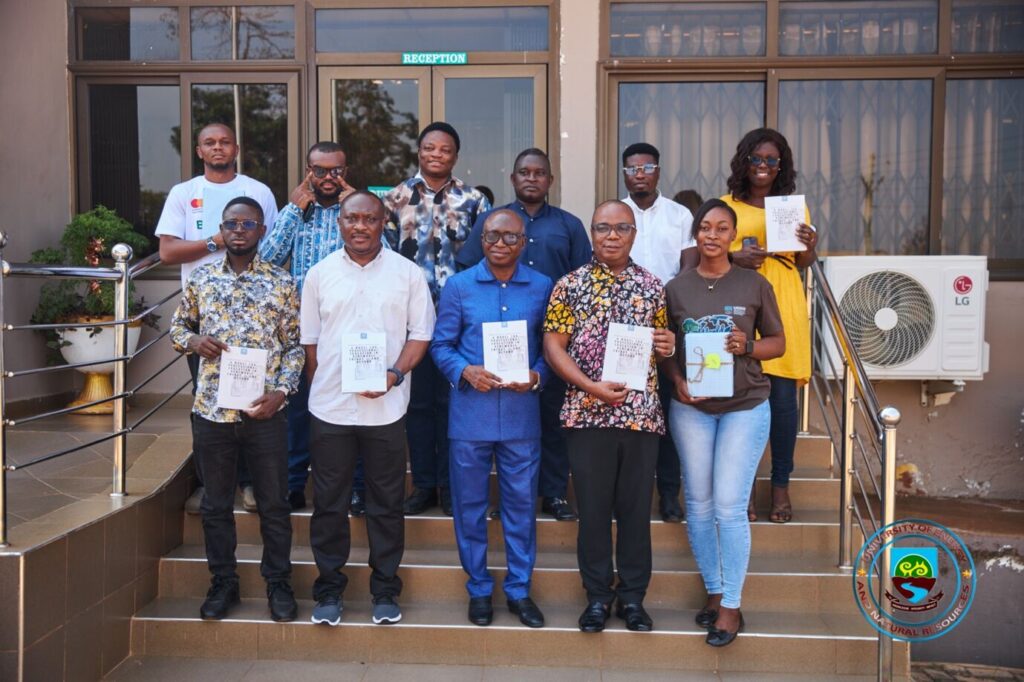
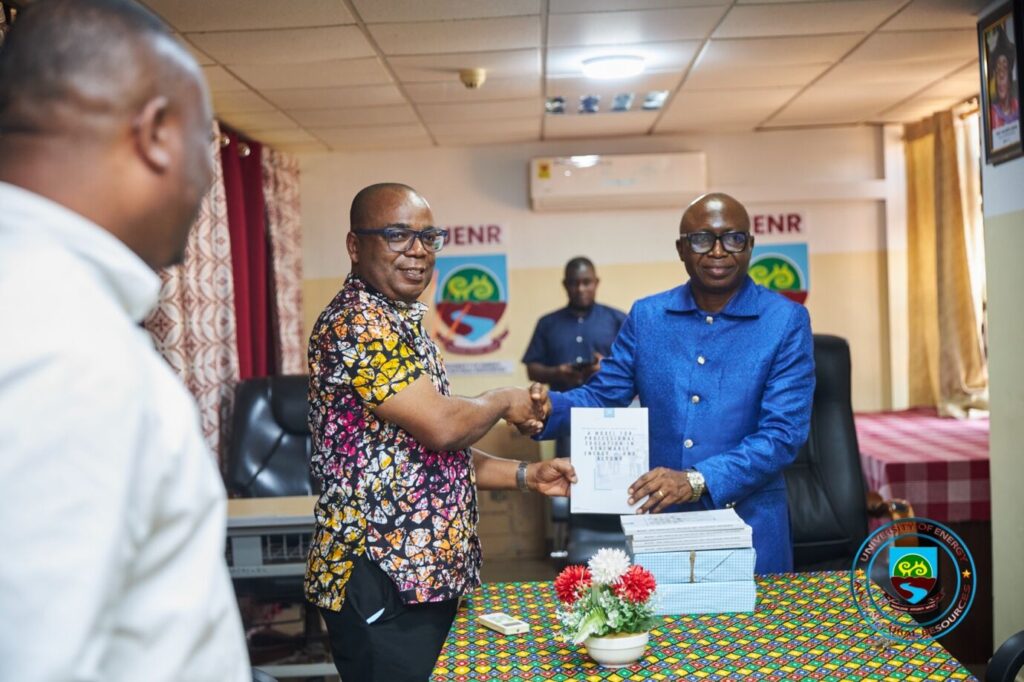
The books, titled “The Model for Professional Education in Renewable Energy in Ghana and Beyond,” were presented to the University during a brief engagement held on Wednesday, February 12, 2026, as part of efforts to document lessons from the Professional Education on the Renewable Energy (ProREG) project.
Receiving the donation, the Vice-Chancellor of UENR, Prof. Elvis Asare-Bediako, commended the project team for advancing the University’s global visibility and supporting its mission of becoming a hub for impactful energy research and education. He urged RCEES to highlight key innovations from the project that could be scaled across the University, stressing the importance of moving beyond short-term outcomes to long-lasting institutional transformation.
Prof. Asare-Bediako further emphasized the need for UENR to continue modernizing its curriculum through practical, industry-oriented learning. He noted that African universities must increasingly position academic research as a driver of development, as seen in Europe, Asia, and the United States.
Presenting the books, the Director of RCEES, Prof. Samuel Gyamfi, explained that the ProREG initiative was introduced to bridge the competency gap between academic curricula and the practical needs of the renewable energy industry. He noted that the project promoted practice-oriented teaching models, trained lecturers in agile learning approaches, and strengthened professional networks between academia and industry.
He added that the publication serves as a comprehensive catalogue of the project’s experiences, achievements and challenges, developed in collaboration with partners including Kwame Nkrumah University of Science and Technology (KNUST), TU Berlin, and industry stakeholders from Ghana and Germany.
Prof. Gyamfi announced that the University Library would receive fifteen copies of the book ahead of its official launch at KNUST on February 24, 2026, which will bring together project partners and invited guests from across Europe and Africa.
Discussions during the engagement also highlighted RCEES’s growing reputation for its specialised energy programmes, which have attracted professionals and postgraduate students from key government institutions and the private sector.
The meeting additionally introduced a new initiative, the Moving Impact Project, which will expand collaborative work into areas such as e-mobility, clean cooking, transportation, agritech and sustainable development.
In his closing remarks, Prof. Asare-Bediako expressed appreciation for the donation, describing the books as valuable and timely resources that will enhance the University’s Library holdings while saving significant procurement costs. He urged the University Library to preserve the materials and integrate the electronic version into UENR’s digital archives.