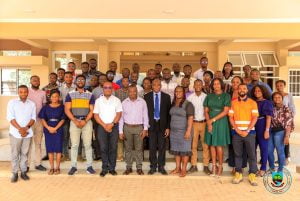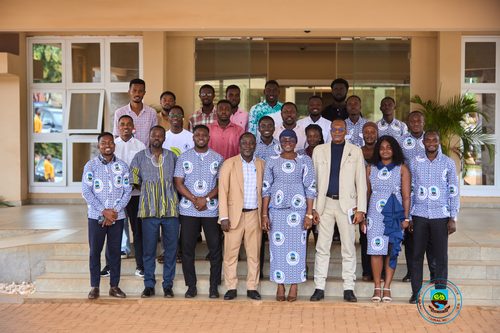
The ENACTUS team of the University of Energy and Natural Resources (UENR) has presented two innovative community-based projects to the Vice-Chancellor, Prof. Elvis Asare-Bediako, and members of University Management as part of its preparations for the ENACTUS Ghana 25th Anniversary National Expo scheduled to take place at the National Theatre Hall in Accra.
The meeting of the University Management provided an opportunity for the team to showcase its innovative solutions to pressing environmental and energy challenges and receive feedback, strategic guidance, and recommendations from the University’s leadership ahead of the national competition.
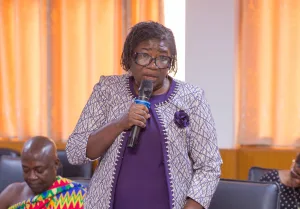
The team leader, Alex Etuah, presented the two flagship projects: the Light After Dark Project and the Bag Project, which seek to address challenges in energy accessibility, environmental sustainability, and community development.
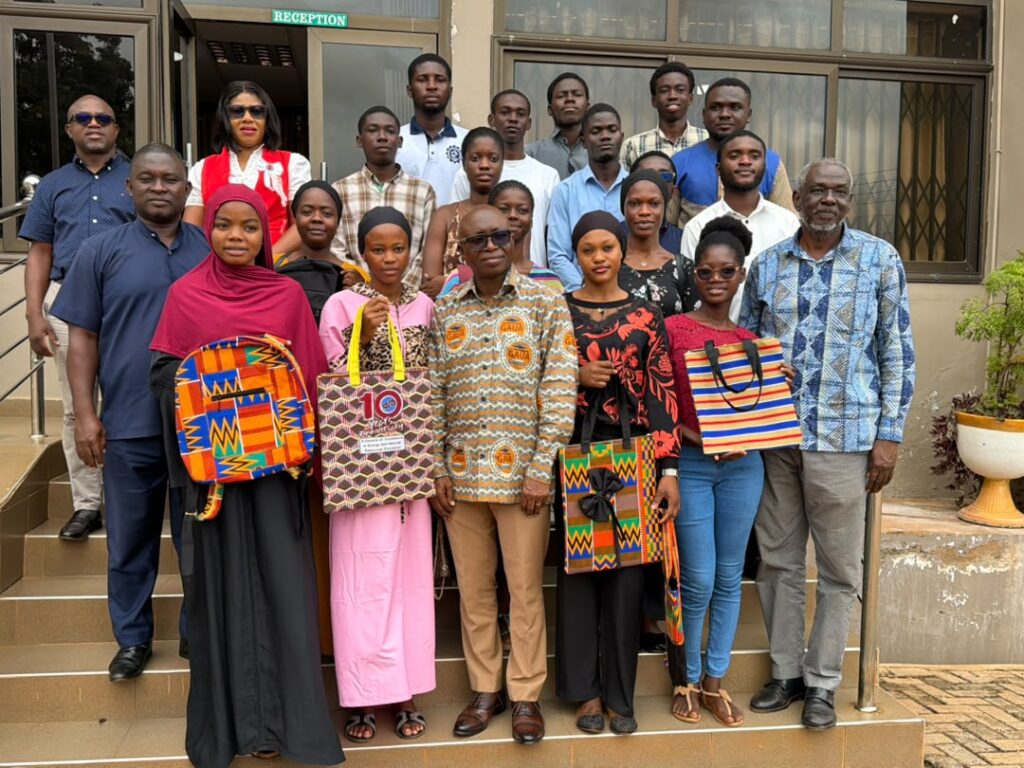
Introducing the initiatives, Mr. Etuah explained that the Bag Project focuses on environmental sustainability by transforming discarded campaign banners and other waste materials into durable school bags for children in rural communities. The initiative also produces environmentally friendly bags for general use while promoting responsible waste management. The project was developed in response to the environmental challenges associated with the improper disposal of campaign and funeral banners, which often end up blocking drainage systems and contributing to flooding in communities. Beyond addressing the waste management concerns, the initiative also seeks to support schoolchildren in rural areas whose learning materials are often affected by inadequate protection during the rainy season. Through the production of affordable and durable school bags, the project aims to improve learning conditions while promoting environmental conservation.
The team also showcased the Light After Dark Project, an innovative renewable energy initiative designed to improve electricity access in underserved communities. As part of the project, the team has developed a solar tracking system that automatically adjusts the position of solar panels in response to the location of the sun. This technology, according to the team, enables the system to capture more solar energy compared to conventional fixed solar panels, thereby improving efficiency.
The project is currently being implemented in Kantro, a community identified through the team’s needs assessment as having limited access to electricity. The assessment revealed that students in the community face difficulties studying after sunset. The team further revealed that the residents experience challenges accessing healthcare services at night and charging mobile devices due to the absence of reliable electricity.
Through the Light After Dark Project, the team plans to provide a community learning center with electricity where children can study during evening hours under improved lighting conditions. The initiative is expected to contribute to better educational outcomes and enhance the quality of life within the community.
During the presentation, the team outlined sustainability strategies for both projects. The Bag Project will rely on continuous waste collection and partnerships to secure recyclable materials, while community participation, training, and local ownership will support the long-term sustainability of the Light After Dark Project.
Commending the students for their creativity and commitment to addressing societal challenges, the Vice-Chancellor, Prof. Elvis Asare-Bediako, described the projects as practical expressions of the University’s mandate to use teaching, research, and innovation to contribute to national development.
He particularly highlighted the potential impact of the Light After Dark Project in improving educational opportunities for children living in communities without reliable electricity. He encouraged the students to continue refining the initiative and exploring opportunities to expand its impact.
Prof. Asare-Bediako noted that both projects strongly align with UENR’s core mandate in energy and natural resource management, demonstrating how innovation and entrepreneurship can be used to address real societal challenges.
He emphasised that universities must extend their contribution beyond academic publications by developing practical solutions that improve lives and support national development. According to him, research and innovation must translate into tangible benefits for communities and society.
The Vice-Chancellor assured the ENACTUS team of Management’s continued support and reaffirmed the University’s commitment to nurturing student-led innovations that reflect UENR’s vision and strategic priorities. He encouraged the team to approach the national competition with confidence and continue strengthening the projects ahead of the expo.
ENACTUS is a global student organisation that empowers young people to develop entrepreneurial solutions to real-world challenges through innovation, teamwork, and social impact. This year, the team from UENR will participate in the 2026 competition, which coincides with the 25th anniversary celebration of ENACTUS Ghana. The ENACTUS Ghana 25th Anniversary National Expo will bring together universities from across the country to showcase entrepreneurial solutions addressing social, environmental, and economic challenges. The winning institution will represent Ghana at the ENACTUS World Cup scheduled to be held in Brussels, Belgium.